I was an office administrator before I became a parts buyer. That sounds like a small difference until a $1,400 repair you ordered ends up on your desk. Then you understand the difference is mostly paperwork.
I manage parts ordering and vendor relationships for a 14-person fleet repair shop. Every year I push roughly $85,000 in parts through seven vendor accounts. I do not turn wrenches for a living. I make sure the part number, the invoice, and the job order line up. When they don't, everybody finds out.
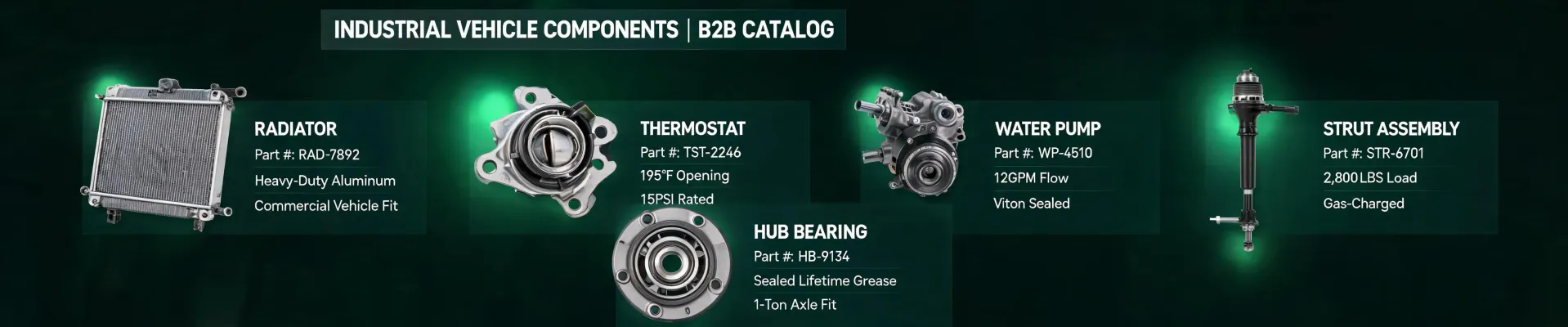
The case that changed my process was a broken wheel bearing. It started as a low growl from the front of a work van. The driver said it sounded like tire noise. The mechanic figured it out faster: it was a wheel bearing. We ordered a Koyo wheel bearing assembly, he replaced it, and the van went back into service.
Six weeks later, that same van came back with the same noise. I was ready to blame the part. The mechanic did not blame the part. He pulled the wheel and found a small mark on the hub mounting surface where the old bearing had been riding. That mark kept the new bearing from seating evenly. A brand-new Koyo bearing on a damaged mounting surface is going to start life with a wobble. It looked like a bearing failure. It was actually an installation-surface failure.
That was the first time I understood I was not looking at a parts problem. I was looking at a process problem.
At the time, I didn't have a name for the pattern. It took me about a year and four comeback repairs to understand something painfully simple: a part replacement is not the same thing as a repair.
The Same Mistake, Four Different Boxes
The pattern repeated in steering, cooling, heating, and lubrication. Each time, the invoice looked correct. Each time, the deeper issue was missed because I ordered a part description instead of a part specification.
Steering: What's Around the Part Matters
A few months later we replaced a Koyo rack and pinion assembly because the old rack was leaking. The leak was real. The rack was also the only part we were looking at. A rack and pinion system includes tie rod ends, ball joints, and mounting bushings. If those are worn, a new rack can be pushed around by the same sloppy suspension that damaged the old one. We now check the full steering system before we order a rack, not after we install it.
Cooling: Matching Shape Is Not Matching Spec
The cooling system gave me a similar lesson. A Koyo radiator cap can be the right brand and the right shape, but the wrong pressure rating. Radiator caps are part of a pressure-controlled system. If the rating is too low, coolant can boil earlier than the system allows. If it is too high, the weak spot becomes an old hose or a radiator seam. Same cap design does not mean same spec.
Even after I learned this, I caught myself asking the wrong question on the phone. I would say, Do you have a Koyo radiator cap for a 2017 delivery van? The supplier would say yes, and I would hang up feeling good. Now I know I should have listed the pressure rating before the vehicle model.
Heating: A Millivolt Thermostat Is Not Optional
The strangest example was not even a vehicle. The gas heater in our parts room uses a millivolt thermostat. When it stopped working, I searched for a millivolt thermostat and found a 24-volt model that looked almost identical and cost less. If I had ordered by appearance or price, I would have bought the wrong unit. The heater runs on millivolt. A 24-volt thermostat would fit on the wall and never turn the heater on. I ordered the millivolt thermostat because the system type mattered more than the shape.
Lubrication: The Word Best Depends on the Engine
Oil filters follow the same rule. The best synthetic oil filter in the catalog is meaningless if the engine needs a different bypass valve pressure or anti-drainback valve. The threads can fit dozens of engines. The internal spec is what decides whether the filter is right. I do not order by the word best anymore. I order by what the OEM allows for that specific application.
Here is the blind spot all of these examples share: most buyers focus on obvious factors, like brand, fit, and price, and completely miss the system context. The question everyone asks is, Will this part fit? The question that matters is, What caused the old part to fail?
The Real Cost of Learning This
Learning through comeback repairs is expensive. That broken wheel bearing cost us double labor, double alignment time, a second round of parts, and a service van that was out of service longer than it should have been. I don't remember the line-by-line total with confidence, but the claim number sits in my head at around $1,300. (This was back in 2023, and no, I don't remember it fondly.)
The quieter cost was trust. Once the mechanics started doubting the ordering process, they began to inspect every delivery as if it might be wrong. That is not a bad habit, but it is a warning sign. My internal customers were doing my job for me because they no longer believed the purchase order.
It also created friction with the back office. If a vendor quote does not say whether the price includes the seal kit or the tie rod ends, accounting cannot code the invoice. That means a follow-up email, then a phone call, then a revised quote. That overhead adds up faster than people think.
The vendor who lists specs and extras upfront, even when the total looks higher, usually costs less in the long run.
The Questions I Ask Before Every Order Now
I am not an engineer. I don't need to know every internal detail. I do need to know the specification that separates a correct part from a similar-looking part. Every order now gets checked against four questions.
- What failed, and what else in that system could be damaged or worn?
- Which specification is critical: pressure rating, control voltage, bypass valve setting, new or remanufactured?
- What is not included in the price: gaskets, sensors, tie rod ends, brackets, core charge?
- If the part number is ambiguous, can the supplier show a catalog page or an OEM service manual spec?
That last question matters more than it sounds. When someone quotes a Koyo rack and pinion, I don't expect them to memorize every number. I do expect them to know which version they are quoting, whether it is a full rack assembly or a bare rack, and what the warranty covers. If they cannot show me, I keep looking.
And when a quote looks too low, I ask the question that has saved me the most money: What's not included? A transparent price is not a low price. A transparent price is the final price, with specifications and limitations clear before I sign. I learned that after enough invoices turned out to be estimates.
Buying Parts Now Looks Different
Today, when I look up a Koyo radiator cap, or an oil filter, or a steering rack, I slow down and ask what problem this part is supposed to solve. If I am replacing a broken part, the new part is only half the job. Finding out why the old one broke is the other half.
If you have ever bought a Koyo rack and pinion, trusted the description, and later watched the same issue come back, you already know exactly what I am talking about. The name on the box is a starting point. It is not the whole diagnosis. Take it from someone who had to learn that on his own time, and with his boss's money.

Elise Novak
Elise Novak is an automotive braking systems analyst specializing in brake pads, discs, rotors, calipers, shoes, drums, hoses, and complete brake kits. She uses UN Regulation 90 requirements and ISO 26867 dynamometer methods to examine friction stability, fade and recovery, wear, disc thickness variation, runout, and hydraulic integrity. Her work helps distributors, quality teams, and fleet buyers compare replacement parts, verify application suitability, and define incoming-inspection criteria.